Airbus · Europe
Airbus A380
First flight · 2005
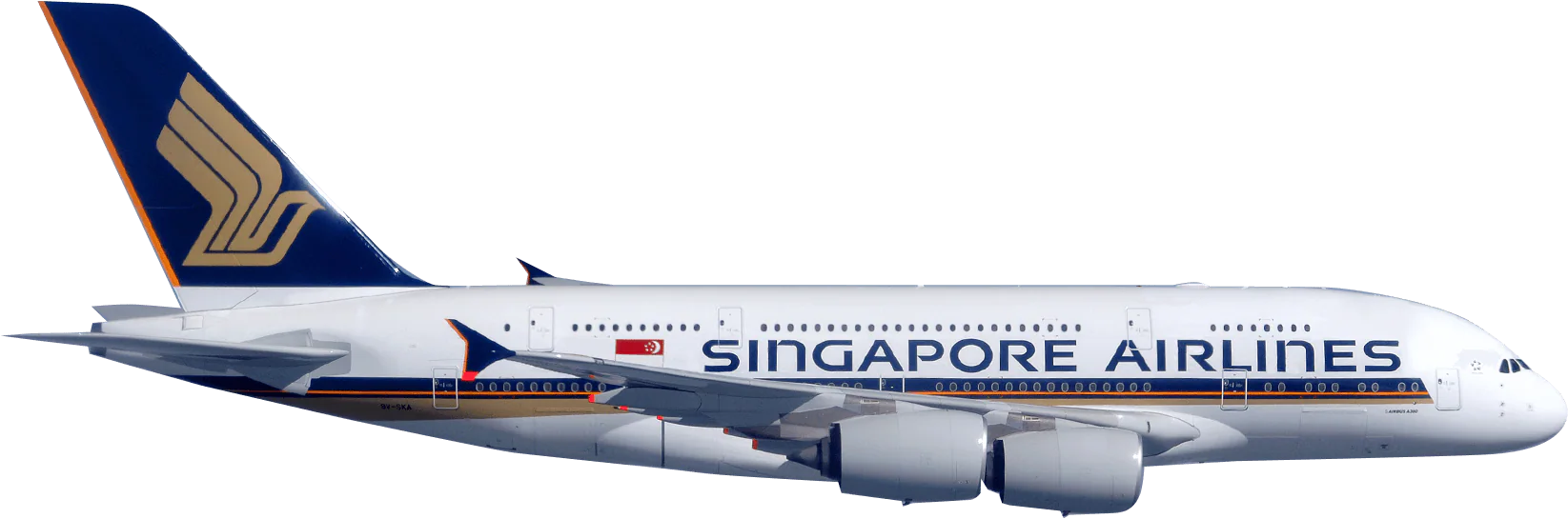
Key Fact
The world's largest passenger aircraft with two full passenger decks, capable of carrying over 800 passengers in all-economy configuration.
Overview
The Airbus A380 is an engineering monument shaped by an audacious bet: that the future of aviation lay in flying more people per departure, not more flights. Its double-deck, full-length fuselage — with a cross-section of 7.14 m — required Airbus to invent entirely new manufacturing logistics, building sections in factories across Britain, France, Germany, and Spain before shipping them by barge and convoy to Toulouse for final assembly. Roughly 25% of the airframe is carbon-fibre-reinforced polymer, and the wing box alone uses CFRP for the first time on a commercial aircraft at this scale. The supercritical wing, spanning nearly 80 metres, is so efficient that the A380 burns just 3.1 litres of fuel per 100 passenger-kilometres — less than a family car. Each of its four Trent 900 or GP7200 engines produces up to 76,500 lbf of thrust, yet the aircraft is certified for noise-sensitive airports because its twin-deck boarding empties passengers faster, reducing block time.
Engineering
Distributed International Manufacturing
Fuselage sections were built in Hamburg, wings in Broughton, the horizontal stabiliser in Cadiz, and final assembly in Toulouse — requiring custom road convoys, barges, and the Airbus Beluga transport fleet. No single factory could produce the world's largest airliner, so Airbus invented a continent-scale supply chain to build it.
First Large-Scale CFRP Wing Box
The A380 was the first commercial aircraft at this scale to use carbon-fibre-reinforced polymer for the wing box — the primary load-bearing structural element. Combined with aluminium-lithium alloys elsewhere, roughly 25% of the airframe by weight is composite, reducing structural mass despite the enormous fuselage cross-section of 7.14 metres.
High Passenger Density Efficiency
Despite four engines, the A380 burns only 3.1 litres per 100 passenger-kilometres — less than a family car. The double-deck configuration's 853-seat maximum capacity amortises fuel burn across far more seats than any single-deck aircraft, making per-passenger efficiency the A380's strongest economic argument at high load factors.
Specifications
Wingspan
261 ft 8 in (79.75 m)
Length
238 ft 7 in (72.72 m)
Height
79 ft (24.09 m)
Engines
4× Rolls-Royce Trent 900 or Engine Alliance GP7200
Thrust (each)
70,000–76,500 lbf
Cruise speed
Mach 0.85 (561 mph / 903 km/h)
Range
8,000 nmi (14,800 km)
Passengers
525 (typical 3-class) / 853 (maximum)
Max takeoff weight
1,268,000 lb (575,000 kg)
Fuel efficiency
3.1 L / 100 pax-km